Nurturing Change
Author
Published
6/29/2026
One full-service grocery store for 67,000 people. That was the situation in north Minneapolis when Princess Titus, LaTasha Powell and Michelle Horvitz were first exploring the need for a food-centered community program 15 years ago.
While there was no shortage of fast-food outlets in the area—38, in fact—it was hard for residents to access fresh, whole foods. Combined with the generational trauma and present-day challenges the North Side’s primarily Black population must manage, many folks gravitated toward fast food instead of healthy, home-cooked meals.
“That’s not optimum for health,” says Titus. But she and her co-founders knew changing mindsets around food wouldn’t be easy. “Usually, those are your comfort foods, your go-to foods, your celebratory foods. We wanted to find a way to compliment people’s comfort foods with fresh and local vegetables, giving them the opportunity to try new things, like arugula or leeks.”
So, the team cooked and ate and talked with 400 community members to help shape the services Appetite for Change (AFC) would offer, building a food program that the community needed and, importantly, wanted. The result was Community Cooks, AFC’s flagship program. It’s not so much a cooking class as a place for folks to learn and teach about food, nutrition and cooking in community.
“If you and I were at this event, we might not know each other, but you like cornbread and I like cornbread,” Titus says. “We get to know each other. We might talk about the process of seasoning a cast-iron skillet to preserve it—my grandmother cooked cornbread in a cast-iron skillet because it gets iron in your body. I would listen more to the community member I was cooking with than an instructor at a cooking class.”
Community Cooks is an ongoing and popular program, but AFC, a 501(c)(3) nonprofit, has since expanded its activities, with a big focus on youth enrichment and development.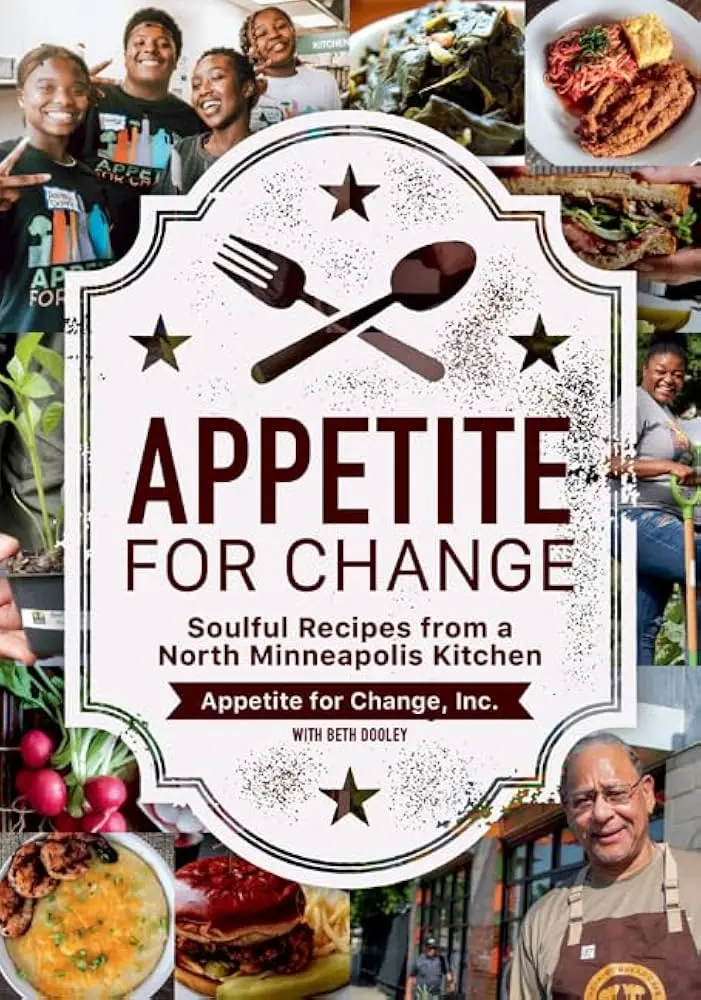
“When we started, we were working with at-risk youth,” Titus says. But after getting involved with AFC, those young people “did a 180-degree turn … because they found solace and peace in planting, growing and cooking their own food.”
As AFC celebrates its 15th anniversary, it has honed its offerings to keep a tight focus on health, wealth and social change for its community. Today, AFC’s initiatives comprise the Youth Training & Opportunities Program, which helps kids build culinary, entrepreneurial and social skills; Community Cooks gatherings; meal box deliveries; a crisis response program; and a podcast, videos and a cookbook. And then there’s the urban farm, which includes 1/3 acre spread across three urban plots and a deep winter greenhouse and hoop house for year-round growing—all of which turn out about 8,000 pounds of produce a year. Titus and other stakeholders also fundraise and regularly advocate for AFC and their community with local, state and national politicians.
AFC currently leases office space and rents growing land, a commercial kitchen and an event space. But within the next several years, its leaders plan to establish a permanent home in north Minneapolis that will house all AFC programs under one roof, creating a centralized space for food access, youth development, urban agriculture and community programming.
Titus knows the power food has to not only bring people together but also create lasting change. While AFC is deeply embedded in its north Minneapolis community, the nonprofit often connects with other organizations, including groups from rural Minnesota and North Dakota. As Titus says, “Food access is not just a Black issue. It’s not just a poor issue. It’s not an inner-city issue. Food access is a human issue.”